
The Congressional Maritime Forces (CMF) is the main naval warfare element of the Congressional Armed Forces five branches and is the second oldest branch in the Congressional State, it was formed in 1899 by Admiral Séan LeMass to counter the large Reveian navy which had been imposing a minor blockade on the West coast.
The Congressional Maritime Forces is part of the Ministry of the Maritime Forces alongside its sister branch, the Congressional Maritime Marine Corps. The Ministry of the Maritime Forces is one of three military sections in the Ministry of Defence. The Congressional Maritime Forces is headed by three main persons, the main administrator is a civilian veteran member of the government, the Minister of the Maritime Forces (MINMFOR), who is appointed by the ruling majority party, then a senior military officer (most commonly an O-10 or an admiral) who would be the Chief of Staff of the Congressional Maritime Forces (CSMF) who is also a member of the joint Chiefs of Staff. The Congressional Maritime Forces current projected strength is roughly 320,926 and a reserve of 157,963 seamen. There is roughly 8 carriers in service with the Maritime Forces, which is one of the largest carrier fleets in the world.
-Headquarters: 209 Castle Street, Dùnbàn City, Province of Dùnbhann
-Minister of Defence: Kane O'Rahily
-Minister of the Maritime Forces: Eoin Harty
-Chief of Staff: Grand Admiral Cian O'Dwyer
-Vice Chief of Staff: Rear Admiral Gerald G. Taylor
---------------------------------------------------------------------------------------------------------------
Mission
The Maritime Forces' mission is to defend the the waters of the Congressional State project its goals across Atera. As of 1962, the Congressional Maritime Forces have been very active, notably projecting its power in the Aurelian Sea and forcing Patalonian forces to abandon its blockade of Ciarraí after breaking the blockade with immense force.
The Congressional Maritime Forces current strategy is centred around force projection and upscaling of neglected areas of the Maritime Forces, like the submarine fleet. The Congressional Maritime Modernisation Command (MARMODCOM) under Rear Admiral Gale Rockford is overseeing the maritime branch of the current modernisation programme nicknamed the "Mústabha Plan" after Field Marshall Michíl Mústabha.
The Maritime Forces' three areas of responsibility are the preparation of naval forces necessary for the effective prosecution of war, the maintenance of naval aviation (including land-based naval aviation), air transport essential for naval operations (and all air weapons and air techniques involved in the operations and activities of the Navy),
and the development of aircraft, weapons, military tactics, technique, organization, and equipment of naval combat and service elements.
The Maritime Forces training manuals state that the overall mission of the armed forces is "to be prepared to conduct prompt and sustained combat operations in support of the national interest." The Maritime Forces five enduring functions are: sea control, power projection, deterrence, maritime security, and sealift.
The Maritime Forces training manuals state that the overall mission of the armed forces is "to be prepared to conduct prompt and sustained combat operations in support of the national interest." The Maritime Forces five enduring functions are: sea control, power projection, deterrence, maritime security, and sealift.
History
Founding (1899)
In the two years following the creation of the Congressional State, Ciarraí and Reveia had been at odds over the legitimacy of Ciarraí's independence. The imperial Reveian Navy had been imposing a strict blockade of all Ciarran ships which was severely crippling the economy of Ciarraí due to its reliance on trade at the time. To counter this, 1st Minister of Defence, Johann Engelsraad commanded trade vessel Captain Séan Og O'Ciardubhan to take 30 captured Reveian vessels and break the blockade in 1899. After the blockade had been broken, Engelsraad had O'Ciardubhan and the fleet officially commissioned as the first Admiral and vessels of the Ciarran Maritime Forces. Engelsraad and O'Ciardubhan would later be honoured as the "Fathers of the Ciarran Navy".
Early Period (1900-1925)
The early period of the Ciarran Maritime Forces was marked by rapid advancement in ship designs, construction and operation. In the first 10 years after the breaking of the blockade, the navy expanded from just the 30 ships which had been captured, to over 100 ships of various types, which included 19 dreadnoughts.
Ciarraí would field its first aircraft carrier in 1919 in the form of the O'Riley Class, which was a converted dreadnought hull, of which it would operate 4 throughout the 1920s until its decommissioning in 1932.
Ciarraí would field its first aircraft carrier in 1919 in the form of the O'Riley Class, which was a converted dreadnought hull, of which it would operate 4 throughout the 1920s until its decommissioning in 1932.
Preparing For War (1926-1937)
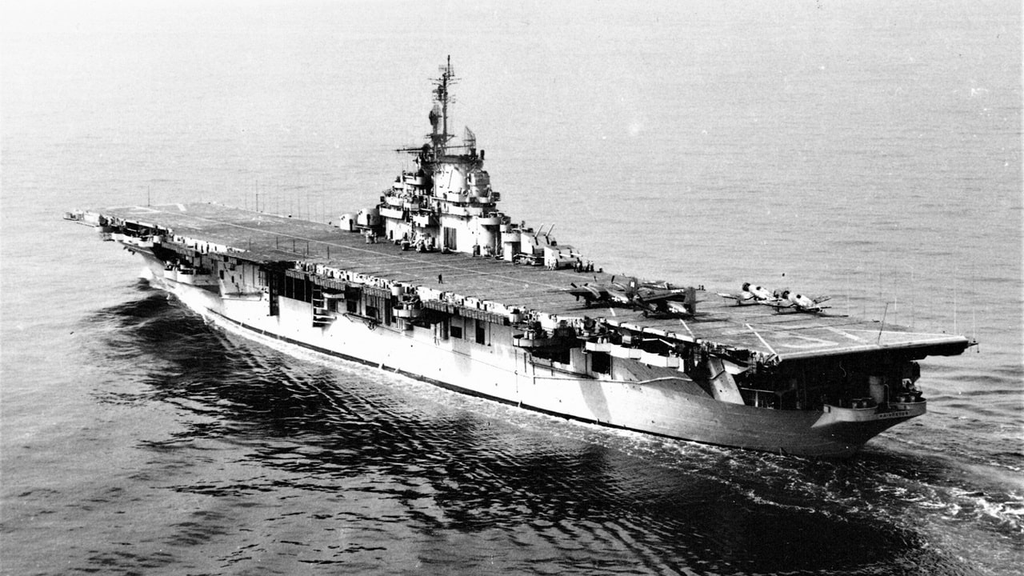
As various nations around Carinidal including Ciarraí began shifting towards fascism, in 1926 the admiralty and chiefs of staff of the armed forces would call for more modern ships to replace the dating carrier and dreadnought fleets, the resulting ships that would be produced over the next 10 years would become the backbone of the Ciarran war effort. These would include the;- Athenry Class Carrier, which made up almost all of the early war Ciarran aircraft carriers. 4 of these were fielded over the first few years of the war, the most known of the class being the CV-23 CMV Galway, which was mainly responsible for sinking the Patalonian battleship Renaud.
The CMV Galway pictured underway off the coast of Heng Hai, July 12th, 1941.
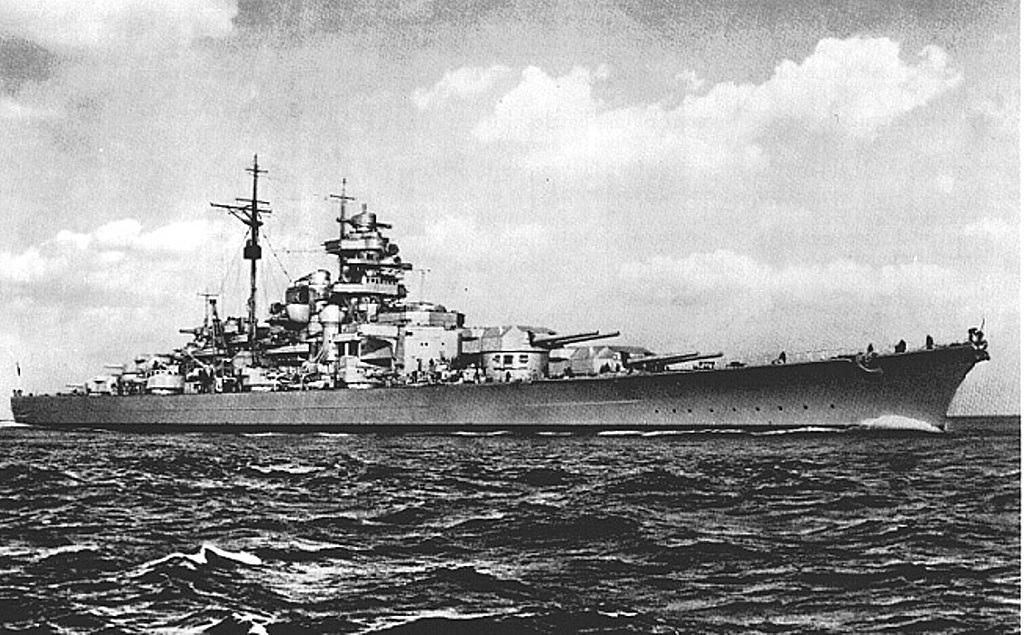
- Engelsraad I Class Battleship, a legendary class of ship that had its first ships begin construction in 1937 and finish in 1940. Notably the flagship, the infamous CMV Engelsraad, it assisted in the destruction of the Renaud in 1941 and destroyed the UPA's pride of the fleet in the same battle, this gave the ship a feared reputation. It's reputation would lead to triumvirate forces designating it a prime target and it would be sunk soon after by a triumvirate task force. There was only ever 4 Engelsraad I's ever produced due to their large size at over 50,000 tons, the remaining ships in the class would be upgraded later to the Engelsraad II a hull would be turned into a carrier.
The CMV Engelsraad pictured underway in the North Aurelian Ocean, March 1st, 1942.
- Invincible Class Battleship, a 1935 design that was made to be a heavy hitting but lightly armoured to favour speed over tanking shots. Most of the Ciarran early capital ship fleet was made up of the Invincible class.
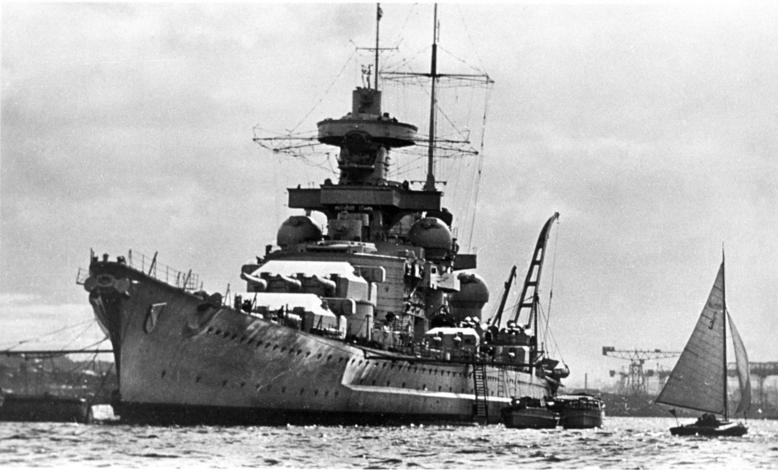
- O'Ciardubhan I, II & III Class Battleships, a 1936 design which was the most common mid war battleship. It became the most common Ciarran capital ship of the war, even outproducing the Invincible class battlecruiser. It would be upgraded multiple times throughout the war, resulting in the O'Ciardubhan II and III classes which further modernised them.
The CMV Sven Knowles, an O'Ciardubhan II class ship, pictured in port in Dùnbàn shortly after the battle of the Straits of Kultur, September 28th, 1946.
- Willow Class destroyer, developed as an anti submarine destroyer, the Willow class was responsible for preventing Triumvirate submarines from sinking vital supply ships during the early war period.
The Great War (1938-1947)
As the the great war kicked off, Carinidal found itself under the big-4, that being Ciarraí, Kutsan, Nykea and Reveia. This alliance was known as the Carinidal Central Powers, the Eastern branch of the Koralberg-Kassian Central powers. The alliance was united in the goal of opposing the Triumvirate and expanding land across Carinidal, Ciarraí's main goal was to utilise its now enormous navy to destroy the Triumvirates fleets and blockade all trade in the East.The ships produced during the war were mostly reactions to enemy advancements and further leaning into the ever changing Ciarran doctrine. Whilst early war ships focused more on light battlecruisers supported by carriers and submarines, over the course of the war the admiralty would focus more on cantering doctrine around carriers and battleships with cruisers and destroyers as screens. Most of the mid war designs would go into service around 1943, but very few saw action after the battle of the Straits of Kultur.
The most notable mid to late war designs were:
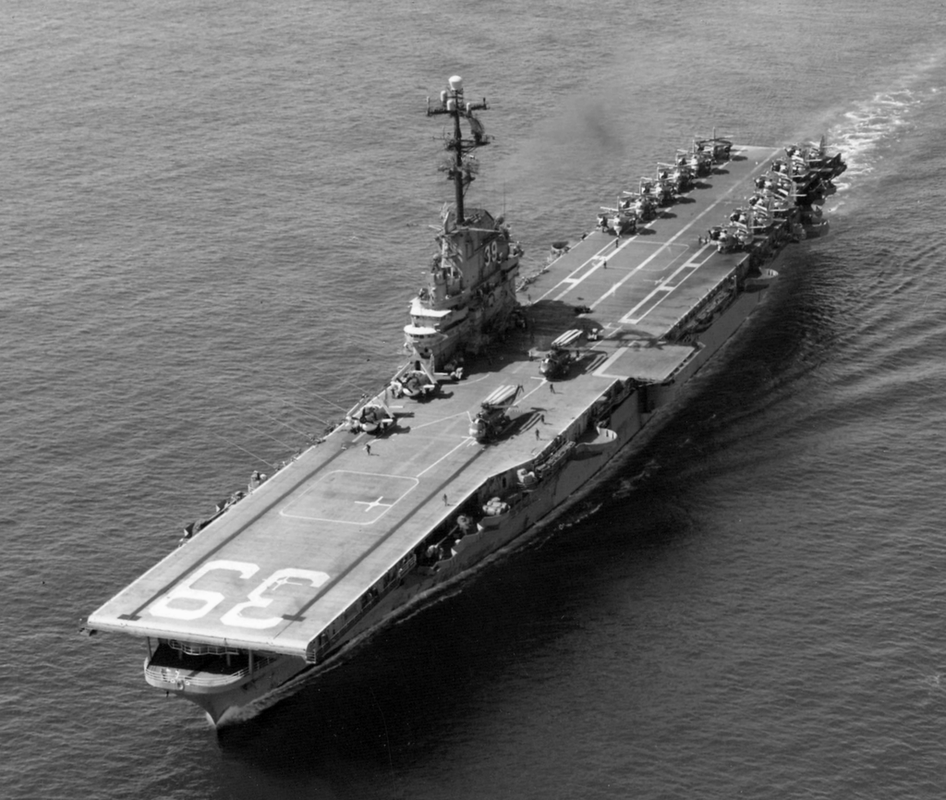
- Lothundreg I Class Carrier, the lothundreg served as the mainline carrier of Ciarraí in the Great War, 6 of these carriers were produced from 1941 to 1943 and they fought in every major battle of the war. Included the CV-36 CMV Ciarraí, CV-35 CMV Téachsaís, which both fought alongside each other until Ciarraí's surrender in 1947. The Lothundreg carriers would be upgraded many times over the war, the most significant upgrades occurred in 1947 when every Lothundreg was given catapults, more advanced radar and more anti aircraft guns, despite revolutionising the class, the upgrades came too late as just a few weeks after the first refit was completed, the war would end.
The CV-39 CMV Kilmaongaol pictured sailing in 1947 just before the end of the war.
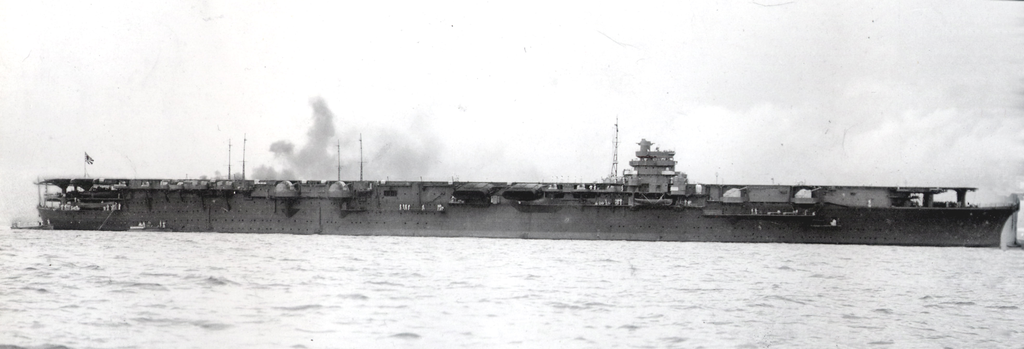
- Dubhlinnia Class Large Carrier, commonly referred to as a "supercarrier" due to its immense size, the Dubhlinnia class was the hull of an Engelsraad that was then made to be a carrier. Its sole purpose was to make a show of force to triumvirate forces, boost morale and replicate the infamy that previous ships had accumulated. It was produced in 1944 and set sail right before the battle of the Aurelian ocean. It reached the battle on the last two days of combat and although its arrival allowed many ships to withdraw, the ship itself sustained heavy damage, rendering it inoperable. The ship would limp away towards Heng Hai before being sunk by FSJN ships just a few days later.
Picture of the CV-27 CMV Dubhlinnia during the battle of the Aurelian Ocean where it took severe damage, September 21st, 1944.
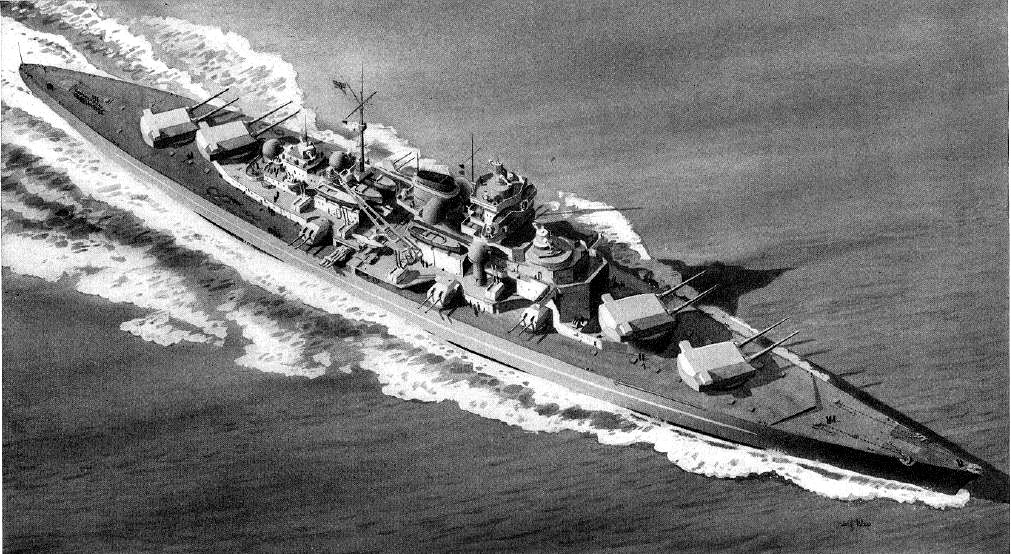
- Engelsraad II Class Battleship, designed as an upgraded package to the Engelsraad I, the Engelsraad II focused on modernising the cannons, radar, fire control and anti air capabilities of the 3 remaining Engelsraad's alongside adapting the design to work better against Triumvirate ships. The most well known Engelsraad II was the Clar Bán, which was feared by the Triumvirate forces after it destroyed 3 battleships at the battle of the Aurelian Ocean. It would later fight at the battle of the straits of Kultur but would manage to take out several cruisers, destroyers and an enemy battleship before being scuttled due to damage taken by torpedoes from enemy aircraft. The 2 remaining ships of the class were destroyed by enemy aircraft at the battle of the Aurelian ocean without inflicting any major damage to enemy vessels.
The CMV Clar Bán pictured by Ciarran planes just hours before taking heavy damage and being scuttled, September 21st, 1946.
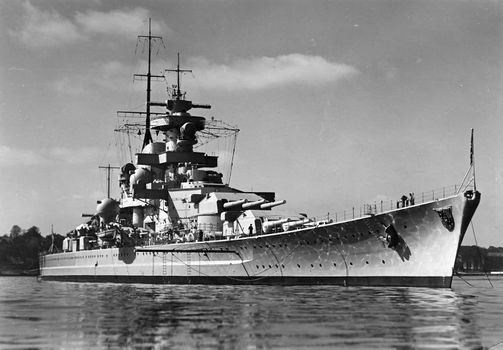
- McClellan I & II Class Battleships, built upon the success of the Engelsraad, the McClellan was meant to be the top of the line heavy hitter for the Maritime Forces. 5 of the McClellan I class were designed in 1942 and began construction in 1943 before halting construction for a several months due to lack of sufficient resources. During this time, several upgrades to existing technology made the McClellan I outdated, leading to 3 of the 5 planned ships being produced with newer systems, whilst the final two never finished construction due to lack of resources after the battle of the straits of Kultur. The 3 ships that were produced fought in the battle of the Aurelian Sea and inflicted heavy losses on the Triumvirate fleet. 2 of the 3 ships would be forced to undertake repairs and avoid combat as a result. The last two ships would sit in drydock until the end of the war in 1947, when they would be scrapped in accordance with demilitarisation enforced by the Triumvirate. The one ship of the class that did fight in the straits of Kultur was the CMV Horatio Gates, which proved itself alongside the Clar Bán as a force to be reckoned with. The Horatio Gates would survive the battle and continue operations for the duration of the war. In 1947, it was taken by the FSJN alongside several other battleships and inducted into their fleet before being decommissioned and turned into a museum ship in 1950.
The CMV Horatio Gates at the Great War Memorial Museum in Dernier, 1952.
- Gaius Dagolitus Class Heavy Cruiser, blah blah blah blah blah blah blah blah blah blah blah blah blah
The first engagements began in the Hyira approaches, where Ciarran and Heng Hainese ships led by Admiral Xiao Honghxu and Admiral Eoin O'Dwyer began destroying Triumvirate escorts and trade ships. These convoy raids would become known as the Great Blockade and would continue throughout the war under the command of Eoin O'Dwyer and his submarine fleet. Patalonian ships would become involved and break through the blockade during the battle. Not wanting to risk a large battle so early into the conflict, Admiral Eoin O'Dwyer kept the main fleet out of range and engaged with planes and submarines.
Ciarran ships at this time would operate out of Heng Hainese ports allowing the maritime forces to operate much further out than they would normally, eventually leading to Ciarran ships engaging triumvirate ships at the battle of the Bay of Carinidal in 1940. Ships of the Northern fleet commanded by Admiral Fitzgerald would engage in intense gun battles with UNR and FSJN ships for two days before causing a retreat amongst the triumvirate ships, destroying 21 ships and losing only 8, none of which were capital ships. The battle proved the effectiveness of Ciarran doctrine in the early war.
Smaller battles would occur throughout the remainder of 1940 and Ciarran submarines would continue to lay waste to triumvirate supply lines.
1941 was a year of much more intense battles. The first of which was the Battle of the North Sea where a combine Triumvirate fleet would charge forth against the North Fleet. The resulting battle lead to the destruction of the Patalonian battleship Renaud and the UPA's pride of fleet whilst Ciarran losses were negligible.
Around 2 months afterward, a task force formed with the express mission of destroying Ciarraí's pride of fleet-the CMV Engelsraad, would engage the Northern Fleet and successfully cripple the Engelsraad before sinking it with torpedoes launched from a Patalonian carrier alongside several Ciarran heavy cruisers.
4 months later, the same Triumvirate fleet would deal a major blow to Ciarraí when they would engage the Northern Fleet Northwest of Traília in the 1st battle of the Northern Gap. The loss of the fleet would cause a significant response from Ciarran admiralty, which was seeking blood after the loss of such an important fleet. The admiralty would then create the 1st Carrier Air Fleet (1-CAF) to strike back at the triumvirate.
The 1-CAF would arrive in the Northern Gap in early 1942 just in time to engage a Patalonian fleet attempting to enter the Irian Sea. The 1-CAF would effectively engage the Patalonian fleet but failed to deal any major damage. The Patalonian fleet would retreat to link up with the Triumvirate task force that sunk the Engelsraad. It was here that the 1-CAF entered into the battle of the Bay of Carinidal in June of 1942. The 1-CAF used a combination of submarines and aircraft to deal heavy damage to the enemy's battleships, before closing in with its own battleships and engaging in what became known as the "Menard manoeuvre" named after Admiral John Menard who was commanding the fleet at the time.
In 1944. A series of small naval engagements would begin to slowly build up to the largest naval battle in history. The Battle of the Aurelian sea would begin when the Reveian fleet would spot and attack several destroyer escorts guarding Triumvirate convoys moving through the Aurelian sea. Unknown to the Reveian admiral Renaud Andersen (not related to the renaud), a combined FSJN-UNR fleet was operating in the area and would immediately engage the Reveish fleet. The battle would continuously increase in intensity as more Triumvirate and Central alliance fleets would reinforce their respective fleets, fighting would increase exponentially on the 23rd of June when the Carrier Air Fleet and Combined Fleet would arrive at the battle, what would follow would be 4 days of non-stop naval battle. The Triumvirate fleets would ultimately claim victory after destroying 3 carriers and forcing the Central Alliance fleets to retreat. The Ciarran fleet survived the battle whilst dealing major damage to the triumvirate fleet, but the Ciarran fleet faced losses it could not replace. Notably, Admiral Fitzgerald would be killed on the Dubhlinnia during the battle when it was hit by triumvirate dive bombers.
Over 1945, submarines took centre stage as the admiralty attempted to rebuild in time to defend in the case of a triumvirate naval invasion. During this time, the Reveian navy was working overtime in the battles of the Western Approaches and the battle of the Southern Cape, small Ciarran fleets would take part in these to assist as much possible.
In February 1946, Ciarrai would retreat from Heng Hai and the SFU to strengthen its core territory and free up more manpower, this move would prove extremely important as it would allow Triumvirate forces to enter the Straits of Kultur without fear of coastal bombardment. The resulting battle of the straits of Kultur (Aka Bhulcán bay) would decisively beat back the ever encroaching Triumvirate navy away from Ciarrais coast, squashing any hopes to naval invade Ciarrai or Reveland.
Organisation
The Congressional Maritime Forces is part of the Ministry of the Maritime Forces alongside its sister branch, the Congressional Maritime Marine Corps. The Ministry of the Maritime Forces is one of three military sections in the Ministry of Defence. The Congressional Maritime Forces is headed by three main persons, the main administrator is a civilian veteran member of the government, the Minister of the Maritime Forces (MINMFOR), who is appointed by the ruling majority party, then a senior military officer (most commonly an O-10 or an admiral) who would be the Chief of Staff of the Congressional Maritime Forces (CSMF) who is also a member of the joint Chiefs of Staff.